Showing posts with label love. Show all posts

Sunday, February 14, 2016

10 Literary Alternatives to "Netflix and Chill"

*SPOILERS*

Wait, who am I kidding? No one reads anymore. Proceed.

1. The Catcher in the Rye and hire a prostitute just to talk


2. Middlemarch and marry the wrong person

photo via http://www.standard.co.uk/
"But...but marrying you would make me so happy. That won't do." 

3. Lolita and rape your prepubescent stepdaughter


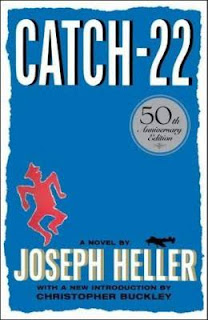
4. Catch-22 and for a brief moment believe that your dead friend's prostitute girlfriend wants to have sex with you before realizing that, no, she is still trying to kill you


5. Much Ado About Nothing and publicly shame and humiliate your fiancee at your wedding because you have been tricked into believing she is cheating on you by a man referred to as "the bastard prince"

"You whore!" Awkward.

6. The Great Gatsby and idolize the man in love with your married cousin who throws extravagant parties and always calls you "Old Sport"


7. 'Tis Pity She's a Whore and skewer your sister/lover's heart with a dagger before parading it around at her husband's birthday feast

Best-worst last line in the history of English literature

8. The Scarlet Letter and secretly father an illegitimate child, leaving your partner to take the fall


9. Jane Eyre and torture the man you love, who is also your boss, by consenting to marry him then leaving him after you discover he has stowed his mentally insane wife in the attic—that's right, he's already married!

Actually, Penguin Classics, Jane describes herself as plain and unattractive. Get it together.

10. The Odyssey and lynch the 12 unfaithful maids who fraternized with your wife's 108 suitors while you were away on business

A romance.

Tuesday, December 8, 2015

Jessica Jones, Sex Robots for Jesus, and the Love/Respect Binary

I. SEX ROBOTS FOR JESUS

What causes someone to voluntarily become a sex robot for Jesus?

I once listened in horror to a podcast subtitled A Good Woman's View of Sex on the Love and Respect Podcast that appeared to answer just this question. 

She doesn't need your respect. Photo via collider.com

If you're not familiar with Love and Respect, it is a popular Christian marriage book written by Dr. Emerson Eggerichs. The book purports to rescue and redeem marriages through the universal application of a simple gender binary: 

Women need love; Men need respect ("desperately"—his word, not mine). It's all based on this verse:
However, each one of you also must love his wife as he loves himself, and the wife must respect her husband. (Ephesians 5:33)
Although Eggerichs repeatedly says in the book and throughout the "Love and Respect" franchise that both men and women need both love and respect, his application of these two concepts proves otherwise.

Essentially, he places any need or desire women have for respect and puts it under the heading "love." He places any need or desire men have for love and puts it under the heading "respect." A woman's core need is love. A man's core need is respect. If you put a gun to a man's head and asked him to choose, he would choose respect; if you put a gun to a woman's head and...you get the idea. If I just keep saying this over and over again, you'll eventually buy into it, right?

The truly "revolutionary" concept in "Love and Respect" is not the idea that husbands should love their wives (which as Eggerichs points out, is old hat by this point), but the idea the wives should unconditionally respect their husbands (109). 

Yeah, you heard that right. Husbands deserve unconditional respect, especially when they are undeserving. 

It's important to emphasize here that in this context respect has everything to do with power. The key to respect is for the wife to consistently demonstrate by word, deed, and tone of voice (or even better, silence) that her husband is in a hierarchically superior position within the marriage. 

A man's power is his God-given right. A woman's power lies in respecting her husband—she gives power away (unconditionally) in order to get it back. Make sense? I didn't think so. 

Now, back to A Good Woman's View of Sex, which is, now that I think of it, demonstrably the worst possible title for this podcast. 

In the podcast, a good woman writes in (we'll call her "Martha") to describe a painful marriage. Martha believed that in order to honor God and be a good Christian wife, she needed to make every effort to meet her husband's sexual needs.

Therefore, she went from "never saying no to sex," because that would be sinful, to initiating sex with her husband every third day, without fail, although he continued to treat her poorly. Basically, he came to expect regular sex. He refused to ever initiate, but would subtly punish her if she didn't offer herself up to him every third day.

In her letter, Martha describes weeping uncontrollably in the shower, knowing that sex would be expected of her that day—knowing that if she did not initiate as expected, her husband would treat her with even more coldness and contempt than usual.

This story is upsetting—this wasn't just a woman submitting to unwanted sex with a selfish and emotionally distant husband because "that's what Jesus would want," but a woman who took it a step further and became the only person in the marriage to initiate sex—emotionally (possibly physically) painful sex that she did not want, but believed God required of her.

In essence, she became a sex slave within her own marriage.

Okay, now we get to the good part. How do Eggerichs and his son Jonathan Eggerichs respond to this letter? Do they mention the concept of self-respect? Do they tell Martha that no, Jesus does not require her to die emotionally every third day in order to meet her husband's sexual needs? Do they perhaps suggest that Martha's husband might want to be married to and have sex with a fully realized, equal human being with thoughts, feelings, inclinations, or a will of her own? And if that doesn't interest him, she should think about getting out of what sounds like an abusive marriage?

No. No, they do not.

Instead, Emerson Eggerichs says stuff like, "I honor you for your obedience to Christ" and "If you worship Christ in the sexually intimate area, [. . .] you are touching Christ's heart" and "this is a good-hearted woman" (refer back to the title of the podcast). At one point, he calls a wife like Martha a "goldmine" for sexually starved husbands everywhere. Most husbands would kill for such regular sexual activity. Who cares that she has to shut down every other aspect of her humanity?

"Love and Respect" the book devotes an entire chapter to "Sexuality—Appreciate His Desire for Sexual Intimacy." Because everything in this book is drawn along a gender binary, men have sexual needs and women have emotional needs. For men, "sex is symbolic of his deeper need—respect" (250). Eggerichs equates respect with sex, and let us not forget the oft-repeated phrase "unconditional respect."

Although Martha's story might seem like an outlier, it's hard not to see it instead as the logical conclusion of "unconditional respect": unconditional sex, or "Sex Robots for Jesus."

Now, let's talk about Jessica Jones.

Watching the new Netflix series was as bracing as the Atlantic ocean in December. I've never seen the issue of abuse tackled like this before—somehow it takes a woman with superhuman powers to show the effects of mental, emotional, physical, and sexual abuse. Jessica is nobody's fool, but even her superhuman abilities and dour wit don't save her from the harrowing trauma of an abusive relationship.

What the show makes plain is that mental and emotional coercion can be just as powerful as the threat of actual physical violence.

Kilgrave abuses Jessica through the use of mind control. He wines and dines her as his perfect, ideal woman, going on and on about how much he "loves" her even as he turns her into his sex slave. As the show demonstrates, the worst kind of emotional and mental abuse eventually destroys a person's will. It breaks down their humanity. Over time, they have no willpower left to resist the abuse, no ability to say, "No."

Christian marriage advice, on the other hand, uses spiritual coercion to guilt women into unwanted sex. It's essentially a form of mind control—the woman submits her will to the "will of God," losing some of her own humanity in the process.

If you tell a devout Christian woman, "This is what God requires," you don't need to put a knife to her throat.

So when you encourage a woman to treat herself as less than human—when you praise her for making herself into a sex robot whose only purpose is to "respect" her husband by meeting his sexual needs—when you tell her that Jesus is pleased—then yes, you are encouraging and enabling abuse.

II. RESPECTING YOUR ABUSER

Ending an abusive relationship (that I initially didn't recognize as abusive) has caused me to more carefully examine words like "love" and "respect."

I've learned that if someone does not respect you as a human being, they cannot love you. Lack of respect, not lack of affection or care (often confused with love) is the cause of abuse. And as bell hooks puts it, "Love and abuse cannot coexist."

In "Love and Respect," Eggerichs addresses the question of whether his conception of "respect" will cause abuse:
Will the concept of biblical hierarchy lead to abuse? [...] Yes, this is possible, but because it is possible does not mean a woman should refuse to allow her husband to be the head. If a husband is evil-willed, the abuse will happen anyway, no matter what the family structure is. Any hierarchical role given to him has nothing to do with the abuse. The evil-willed man always treats those around him abusively (207).
I absolutely disagree. Shrugging and saying "Evil be evil" or "Abusers gonna abuse" is both misleading and f***ing irresponsible. 

Eggerichs fails to admit that he is putting powerful, ready-made, "biblical" (his word) tools into the hands of the abuser. Will reading "Love and Respect" turn an ordinary man into an abusive jerk? Doubtful. But an abusive man would have a field day with the concepts presented, and could easily use them to further control and manipulate his wife or girlfriend.

Here's why:

The words "love" and "respect" are deliberate. They are words favored by abusers.

I can't stop hearing Kilgrave's voice in my head:

"Jessica! Jessica! I love you!"

Nightmares for days
My abuser said the same thing (minus the Jessica part). He told me, "I still love you." And then he indirectly threatened me (but only because he was trying to help me and he didn't want to see me suffer!)

Hearing "I love you" from an abuser creates a huge amount of cognitive dissonance: "But he told me he loved me! Over and over again with tears in his eyes!"

Only when I began to see that the "love" itself was abuse did the fog start to lift.

And then there's that other word: respect. I've written about how another abusive man in my life used to repeatedly say, "You don't respect me!" By "respect" he meant exactly what Eggerichs means in "Love and Respect". He meant, "You don't submit your will to me. You don't treat me as being above you. You won't give in to me."

You see, respect as Eggerichs conceives of it—that is, the respect men "desperately need"—is always a hierarchical value. Men need this kind of respect in order to feel like men. It's an odd setup, where men are the more powerful entities (by God's design), but without a woman following them around all the time telling them how much they respect them, men collapse emotionally, spiritually, and probably sexually (Eggerichs writes that "respect beats a dose of Viagra any day!"). It's a spiritual variation on a common theme: men need women to prop up their fragile egos.

I can still remember the time I told my ex-boyfriend that I respected him. He lit up like a Christmas tree. I don't even know why I said it—maybe the love/respect doctrine had trickled down to me somehow. I had just confronted him with some things that he had said and done that troubled me—so perhaps this was my way of restoring equilibrium in the relationship.

I wonder whether I used "respect" like Trish Walker does with Kilgrave in "Jessica Jones"—to prevent him from turning, and tearing me to pieces. Now, this is a type of respect that I can relate to—the kind of respect that I pretend with men so that they will stop hating me, stop abusing me, stop treating me with contempt, or just simply leave me alone. Did my "respect" keep my ex-boyfriend from treating me abusively later on? No. It didn't.

Joy Eggerichs, the daughter of Emerson and Sarah Eggerichs, talks candidly on her website (billed as "Love and Respect" for the current generation) about being in an abusive dating relationship where the guy would tell her she was being disrespectful in order to manipulate her. By her own account, she went to her parents and asked them if she was really being disrespectful.

Luckily, she got out of that relationship. But here's my question: Why would Joy (as an adult, presumably) need the outside validation of her parents to confirm that she was being manipulated? Why would the progeny of the love/respect dynasty fall prey to a common tactic of abusive men?

Perhaps because the only guidance that "Love and Respect" gives about abuse is that we need to somehow discern between "good-willed" people and evil people, without giving any real guidance on how to tell the difference.

III. LOVE AND RESPECT AND ABUSE

Eggerichs grants that at times, women might need to submit to God instead of to their husbands, for example, in cases of physical abuse.

Later on, however, he relates the story of one woman who went back to her previously abusive husband (he repented), but was still struggling to show him respect. She writes:
My heart's desire is to win my husband to the Lord through my respectful behavior. I must admit I have to "mull over" some of your teaching, but it IS biblically based, and the Holy Spirit keeps revealing my rebellion, contempt, disobedience, etc. I keep asking the Lord for strength to implement your suggestions, and He is so faithful!
This letter creeps me out.

Basically, the husband abused his wife, but she is the one who needs to work on her rebellion, contempt, and disobedience. This reeks of Stockholm syndrome. Any time a thought arises within this woman's mind that even hints at self-respect, anger, or, I don't know, boundaries around being abused, she beats it down as a sign of rebellion—against God!

And this is not the first abused wife in the book jonesing for more ways to unconditionally respect her husband. In another story, a woman emails Eggerichs wanting more resources and guidance about respect, but fails to mention how her husband once threw a dish at her, cutting her face.

Eggerichs' response to her selective account of her marriage: "What a woman!"

I'm not kidding. Her husband threw a plate at her face and she needed to learn more about how to respect him (he apparently repented while sitting in jail).

The connection between "Love and Respect" and abuse is not a coincidence. The false binary between love and respect is textbook spiritual abuse—"scriptural" mind control.

IV. CONTEMPT IS FOR WOMEN

Eggerichs deliberately uses the word "contempt" only in the context of a wife having or showing contempt for her husband—as if contempt, the opposite of respect, were a gendered phenomenon.

Women treat men with "contempt" (the word or its variations appears a total of 48 times in the book, always gendered female), while men are "harsh" (20 times, gendered male). Notice that women are described as contemptuous more than twice as often as men are described as harsh.

Men are never described as having or showing contempt for their wives. Why is that? My theory: It is impossible to show contempt for someone who is already beneath you, see also the phrase "beneath contempt." Eggerichs encodes his own misogynistic attitudes into his use of language.

It goes further: women are overwhelmingly portrayed as the ones responsible for marital problems and strife. I believe this is also deliberately gendered: women are the ones expected to buy the marriage books. They are the ones who should shoulder the emotional burden of improving a troubled marriage—see the previous two stories from women who were abused. 

Eggerichs' overwhelmingly gendered use of the word "contempt" sends women a clear message: It's your fault; it's your responsibility.

On the Love and Respect Now blog, writer and former missionary Alece Ronzino writes about her husband at the time literally throwing the book "Love and Respect" at her and saying, "Maybe this will teach you how to respect me like you should instead of accusing me of having an affair."

What do you know. He was having an affair.

Mindblowingly, Alece concludes this story by affirming her own ongoing struggle to respect her ex-husband despite his manipulation, abuse, and infidelity.

Yes. The moral of the story is: How do I continue to show respect to a man who has betrayed me and treated me with overwhelming contempt?

In a way, I appreciate the incredible effort Joy and Alece make to shoehorn even this traumatic story into the love/respect binary.

But on the other hand, someone throwing a book titled "Love and Respect" at you is the equivalent of a gigantic, neon, glowing sign that reads, "GET THE F*** OUT OF THIS ABUSIVE RELATIONSHIP", not a gentle suggestion that maybe you need to learn some respect.

Trying to demonstrate unconditional respect to a person who is only interested in manipulating and abusing you is, needless to say, a very, very bad idea. Telling an abuser or a controlling person, "I respect you," doesn't tend to make them less abusive or controlling. Instead, as I found in my own personal experience, they are more likely to escalate the abuse.

If you are in an abusive relationship, the last question on your mind should be, "How do I respect my abuser?" That's hyperbolically equivalent to asking during an attempted murder, "How do I show my murderer that I genuinely admire his skill with a knife? Perhaps a mid-stab compliment is in order."

Notice that I used the "C" word to describe how a man treated a woman. I think my use is perfectly valid, and anyone who tries to convince you that it is impossible for a man to have or show contempt for a woman is either delusional or has a deeper agenda at stake.

Going back to Martha's story, I can't imagine a greater expression of contempt for another human being than to use her body but reject everything else about her.

What Eggerichs and Eggerichs fail to acknowledge in their podcast is that this woman's supposedly godly and praiseworthy behavior only caused her husband to treat her even more like a sexual object and less like a human being.

V. SEX ROBOTS AGAIN

As far as I can tell from reading Joy's comment on Alece's post, women can potentially save "disobedient" men by showing them respect. But it doesn't always work. Sometimes people are just evil (there's that helpful advice again).

Wives saving their disobedient husbands through unconditional respect is a huge theme in "Love and Respect," based on these verses:
In the same way, you wives, be submissive to your own husbands so that even if any of them are disobedient to the word, they may be won without a word by the behavior of their wives, as they observe your chaste and respectful behavior. (NASB, 1 Peter 3:1-2)
Which Eggerichs shortens to:
The apostle Peter reveals that husbands who "are disobedient to the word" (meaning they are undeserving of respect) "may be won . . . by . . . respectful behavior."
Notice that the burden is on the wife to save her husband. And how does one save a husband? By having sex with him as often as possible—um, I mean, by respecting him.

Eggerichs' comments in the "Good Woman" podcast make so much more sense now—Martha is literally worshipping God by having sex with her husband. She may be dying on the inside, but all that matters is that her vagina is winning him to the Lord.

Eggerichs claims that it's not like she's being "tortured" or "crucified" or anything. I feel like the fact that he even uses these words implies the opposite. She is crucifying her own will. She is crucifying her emotions. She is crucifying her body. She is emotionally tortured every three days over a two year period.

And to be consistent here, isn't that what women are supposed to do? Be Jesus for their husbands? Die a little more each day so that he might "live"?*

Sex Robot = Sex Martyr

VI. LOVE AND RESPECT AND JESUS

I have yet to read a single story in the entire love/respect canon that describes a woman standing up for herself and saying, "No." No, I will not abused. No, I will not stay in a situation that puts my life at risk. No, I will not stay in a marriage in which I am emotionally and sexually degraded.

Women are being counseled to trust the love/respect doctrine over their own self-preservation instincts—and I'm not just talking about life-threatening situations, though of course those exist.

I'm talking about preserving your life—your emotional, spiritual, rational self—precisely the self that abuse seeks to destroy. Precisely the self that, according to Christianity, Jesus died to save.

And that's probably the primary reason that "Love and Respect" the franchise makes me so f***ing angry, and what makes it so spiritually abusive at its core:

"Love and Respect" uses the gospel of Christianity to keep women enslaved in hierarchical, if not abusive, relationships, where they are told to subjugate their anger, their intuition, their analytical abilities, their desire for meaningful work and a career, their sexuality, their bodies, their voices, and their facial expressions* to the overriding goal of "respecting" their husbands.

So I'm going to call "Love and Respect" what it is: a false doctrine. Idolatry. A dangerous, misogynistic, and abusive ideology masquerading as the biblical, magic pill solution to all male/female relationships.

VII. LOVE WITHOUT RESPECT IS ABUSE

It feels ironic to read a book about how much men need respect when I've been writing about how disrespected I've felt in relationships with Christian men.

Usually, love or romantic feelings are used to justify or gloss over disrespectful behavior—so that the men who have treated me the most abusively or disrespectfully are also the ones who have expressed the most love, affection, and attraction.

When a man tells me that he "respects" me, it's usually after he has treated me in an incredibly disrespectful way—this seems to indicate that men understand how manipulative the words "I respect you" can be.

I've struggled with how to characterize this lack of respect for women in the Christian world. It's more than a simple lack of respect. It's not even contempt, because "contempt" implies that you actually see the other person.

I think it really comes down to the idea that women are less human or not fully human. This is the only way I can explain the abuse, especially as it coexists with "love." It's the only way I can describe a man who violates my boundaries even as he sheds crocodile tears over the depth of his love for me.

"Jessica Jones" captures just how terrifying it is to have such a man tell you he loves you.

Give me respect any day.


*Eggerichs makes a huge meal out of the fact that men are willing to die for their wives. He uses this willingness to die to justify a man's inherently superior station in the marital hierarchy. I once watched a baffling video clip of him telling women something like, "Remember that your husband would die for you. He may never open up to you emotionally, but he would die for you" as if this were somehow sufficient consolation for having an emotionally distant husband. I just picture lonely women rocking themselves to sleep every night saying over and over again, "He would die for me, he would die for me, he would die for me..."

Given the statistical probability of a man ever having to die for his wife, what about the slow death of living in an abusive or unloving relationship? What was that saying again: "Death by 1,000 Cuts."

*"A simple application is that a wife is to display a respectful facial expression and tone when he fails to be the man she wants" (43)

*"Right or wrong, men interpret their world through the respect grid, and a wife's softened tone and facial expressions can do more for her marriage than she can imagine."

*"Love and Respect" includes two letters from wives who have learned how to control their facial expressions (191, 302) and the glowing effect it has had on their marriages.

All pages numbers are from the Kindle edition of "Love and Respect."

Thursday, September 24, 2015

What About Grace?

These three words have stuck with me.

I had just set clear-cut boundaries in a relationship. Someone I had been close to hurt me--intentionally or not, I have no idea. I set boundaries in order to protect myself, not punish him. And he responded with anger:

"What about grace?"

I remember how much he seemed to hate me, even as he uttered these words.

What I was doing was the opposite of grace: Not-Grace--condemnation, judgment, bitterness, unforgiveness (a sin for Christians).

By setting boundaries in a relationship, I was refusing to extend "grace." How often is grace invoked when a public Christian figure has an affair, sexually abuses children, uses shame and ostracism to control church members. How often is grace invoked by Christians in an--as far as I can tell--ungracious tone of voice.

Here, let me lecture you about what grace is, right before I bash you over the head with it, you sinner.

Grace as artillery. Forgiveness as a weapon.

What is grace, anyway?

I picture something beautiful. Something quiet, yet unrelenting.

In that moment, I didn't feel grace. I felt anger, hatred, and blame--if he hated me, if he abused me, it was my fault for not being graceful, or full of grace.

In this lopsided arrangement, grace is always for the perpetrator, never for the victim. It shames you for not being more forgiving. It reminds you that you too are an imperfect person in need of grace. It urges you to forgive, well before you are ready. It puts the burden on you to restore the perpetrator to wholeness.

So, what about grace?

Reflecting from a distance, Grace was setting boundaries. Grace was asking for help when those boundaries were violated. Grace was having the courage and the freedom to leave. Grace was feeling safe again. Grace was and is refusing to blame myself for the actions of another person.

Grace is not intimidation or threats. Grace is not a tool of manipulation or coercion. Grace is not an angry, 6'4'' man cursing at you, getting in your face, and demanding that you forgive him.

I crave the grace of small, tiny moments when I am allowed to grieve. When it is okay to be not okay. Where my reactions are not judged or rejected.

Grace. What about it.

Monday, December 15, 2014

Undateable: Why Single Christian Guys Are All Dented Cans - The Misogynist


[For an introduction to this series, go here.]

There's nothing subtle about misogyny. The word literally means, "the hatred of women."

To me, if a guy is a misogynist, it makes him undateable. Harsh, I know. But a girl's gotta have her standards. If a man hates women and wants to date me, I consider it a conflict of interest. Because I am a woman. Sorry. It's not something that I chose. You could say it chose me.

Recently, I checked out this book from the library and had it sitting relatively inconspicuously in my apartment. Three different women came over in one evening, each arriving at a different time. All three immediately noticed the book and had a strong reaction to it:

Christian Men Who Hate Women

Despite the cheesy title and vaguely 80s slasher flick cover, the book reads as just as relevant and resonant (Mark Driscoll) now as it did when it was published 24 years ago. From the book:
"Christian men who hate women are in some ways even more dangerous than their non-Christian counterparts. Non-Christian misogynists do not have the additional arsenal of church doctrines, God-talk, and the "sanctioning" of male authority, which comes in a Christian marriage. Their wives are not taught from childhood to 'submit' to men 'no matter what' because it is 'God's will.' Thus Christian relationships based on misogyny are much more complicated due to the theological, cultural, and traditional influences that tend to reinforce the misogynist's prejudice against his wife." (Dr. Margaret J. Rinck, Christian Men Who Hate Women)
This leads to an important question as someone who dates and has dated Christian men: How do you tell if a Christian guy is a misogynist? If he doesn't walk around with a T-shirt that reads 1 Cor. 14:34 or ask you about how much you like to cook and clean on the first date, how will you know?

In addition, should we draw a clear distinction between the dude who makes tasteless and unfunny jokes about women (we all know this dude) from a man who uses or abuses women?

The misogynist is probably always sexist, but is the sexist always a misogynist?

Good question. There is probably no foolproof detection method, but I do know that a guy I dated turned out to be both (it was an unpleasant surprise to say the least).

It started with banal, oft-repeated (by men in general) sexist comments and stereotypes and turned into full-blown hatred, emotional manipulation, and abuse.

So on that fun note, here are some things that might be true of the misogynistic Christian guy:

He believes in rigid, non-negotiable gender roles

I'm not talking having complementarian leanings, I'm talking:

"A woman's primary role is to stay home and take care of the children and the household."

"Women should never hold a leadership role in church."

"If a man isn't the sole provider for his family, then he's not a real man,"

I've definitely met guys who say they would prefer for their wife or future wife to stay at home with the kids--but when confronted with specifics, they actually have no hard-and-fast rules, and that's key. 

He refers to his ex-girlfriend(s) as "a bitch," "crazy," "gold digger," "slut," "overly emotional," etc.

This one seems like common sense, but if your date starts talking about how crazy, deceptive, and destructive his ex was, you might think, "Wow, I'm so much better than his last girlfriend" instead of "I wonder if he's going to talk about me that way too."

Of course, a guy may have been treated very poorly in past relationships. This doesn't excuse talking about another human being with a lack of respect, and there's something about gender-inflected stereotypes and insults that is especially telling--of his character, not hers. 

He uses one tone of voice and type of language around his "bros," and another around you.

He may use sexist humor or the degradation of women and femininity to establish or build rapport with other men. He is one way with his buddies and another way around you.

He often uses hierarchical language to describe himself or other men.

He refers to men as either "alphas" or "betas." He's preoccupied with power differences, particularly between himself and other men his age. He's concerned with appearing "weak" or feminine in front of other guys and looks for their approval in subtle ways.

He's racist, sexist, homophobic and/or speaks about "the Other" with disgust

How does he talk about and treat those he sees as "Other"?  Does he talk about UCLA fans as if they are less than human? Use derogatory language to describe muslims or those of other faiths? Make cruel jokes about those he considers unattractive?

He generally blames other people or things for his problems.

This is a larger character defect obviously not limited to men. But if a man tends to blame others for his actions, failures, mistakes, or shortcomings, this will also apply to his closest relationships. He will be able to justify any abusive words or actions, because they will never, ever be his fault. In fact, they will probably be yours.

He becomes defensive or hurt or attacks you if you confront him about his misogyny or sexism.

Defensiveness is a corollary of the last point. Men who do not take responsibility for their actions are by nature extremely defensive. They have built-in defense mechanisms against anything that might threaten their own views about themselves (as caring, loving, rational, good, etc.).

If you find yourself defending your own actions after confronting his, that is a bad sign. If you let him, he will turn the scrutiny onto you and your perceived faults.

He puts you on a pedestal.
"[T]he greater the idealization, the greater the devaluation when it finally occurs."
- Dr. John Townsend in Hiding From Love
You know what you put on pedestals? Things. Idealization is simply another form of objectification, and has far more to do with his needs than your perfection.

He might treat you like an extremely valuable, fragile glass vase at the beginning of the relationship--striving to meet your every need, handling you with care. Unfortunately, objects are made to be used, and when they no longer serve their (his) purpose, or when they cease to be useful, they are made to be destroyed.

How do you distinguish between the man who treats you with love and respect and the man who idealizes you as an object he can worship?

Is he secure or is he anxious? Does he respect your boundaries? Does he hear what you say or what he wants to hear?

He abuses you physically, mentally, emotionally, or spiritually

I started writing about misogyny, and here I am writing about abuse. I think this because abuse is the end game of misogyny. If you find yourself in a relationship with a misogynistic man, it's only a matter of time before he turns this hatred on you.

Questions:
Is he hurting you?
Is he destroying what you love?
Are you living in fear of "the next time"?
Are you constantly in "fight or flight"?
Are you caught up in a cycle that seems impossible to break?

Please check out more resources about this topic at the end of the post.

I'm not saying that any one of these traits is necessarily indicative of misogyny (with the exception of abuse), but a cluster of them could be a pretty big red flag.

Abusers rarely batter you (physically or verbally) on the first date. In fact, at the beginning of the relationship, an abuser will pour on the love, idealization, empathy, etc., so that when he starts the abuse, you are already "hooked."

The point of this post is simply to point out some of the warning signs of misogyny--so hopefully you can leave before it ever gets to that point.

He eats peanut butter Cap'n Crunch for breakfast

Just kidding about this last one. Peanut butter Cap'n Crunch is my favorite.

Resources:
Christian Men Who Hate Women
Why Does He Do That?
The Verbally Abusive Relationship
Power and Control Wheel
Should I stay or should I go?
The National Domestic Violence Hotline

Monday, December 1, 2014

Undateable: Why Single Christian Guys Are All Dented Cans - Introduction

I love the miscellaneous sale section at Ralphs. Tucked between the dairy section and the packaged meats you can find nine dollar bottles of wine, congealed donuts, leftover Halloween decorations, six-day-old apple pies, Duck Dynasty costume castoffs, cartons of pedialyte, bruised apples, liver-spotted bananas, and Barbie bandaids.

Way, way in the back, hidden behind a few dubious boxes of laxative tea and 100 count bottles of aspirin, it sits.

Our friend, the dented can.

Back when I worked full-time at a book warehouse, I used to read a lot of books (more like skim, but who's judging). One of those books was a chick lit novel called The Big Love written by Sarah Dunn.

The twist in this particular novel is that the heroine was a lapsed evangelical Christian. And there was this one passage that stuck out to me, which I've excerpted at length below, that made me go Yes Yes I SAID YES:
My happy place
Photo by labullets.blogspot.com
I should have known about Gil, of course. I should have known the way you know about a dented can. But this is the thing: everyone has been warned about dented cans, but surely not every dented can is bad, or they wouldn’t be allowed to sell them, right? Someone’s buying those dented cans. Someone’s taking them home and opening them up and examining the contents and then making a bet about whether or not the stuff inside is safe to eat. And let me tell you, when you’re twenty-five, and a virgin, and you refuse to date anybody but a Christian—and not just any Christian but a certain kind of Christian—your options are all dented cans. When Gil and I finally broke up, I took another look around the church basement, and I had the closest thing I’ve ever had to an actual vision. There sat Brian Berryman. Single. Thirty-two. An attorney. Crown prince of the church basement. So morally upright he didn’t believe in dating; he believed in praying. He’d been praying for a wife since he was sixteen. He’d drawn up a list of all the qualities he wanted her to possess, a list which he was continually revising, and then praying about, and then revising some more, and then informally circulating among the single women at the church. A woman of pure heart, the list would go. A gentle and quiet spirit. A submissive nature. Is this what you want in a husband? I heard a voice saying. Well, not an actual voice, but it was as clear as day. I realized that if I kept searching for husbands in church basements I was going to end up with a seriously dented can. [from The Big Love by Sarah Dunn, emphasis mine]
"So, what, Ms. Blogger, are you saying that all single Christian men are dented cans?"

Yes. Hell, I've dated a few of them.

No, but it sure feels like it sometimes, as if I'm walking by the sale section, scoping out the goods and thinking, "Oh please, Lord. Not that one."

When it comes to dating within Christian evangelical culture, it often feels as if you're screwed if you do, and screwed if you don't (or not screwed either way, now that I think about it).

That's the honesty part of this post--the hopelessness part. But this series (Yes! A series!) is not about hopelessness--it's about those qualities in single Christian guys that make them undateable.

I'm well aware that we are all dented cans. But perhaps a distinction can be made between the can of diced tomatoes sporting a few delightful and adorable indentations from being dropped on its head a few times and the can of sliced yellow peaches in a light syrup that gives you a fatal case of botulism.

Join us next time for a lighthearted take on:

Undateable: Why Single Christian Guys Are All Dented Cans - The Misogynist
Undateable: Why Single Christian Guys Are All Dented Cans - The Coward
Undateable: Why Single Christian Guys Are All Dented Cans - The Racist
Undateable: Why Single Christian Guys Are All Dented Cans - The Myth of Persistence 
Undateable: Why Single Christian Guys Are All Dented Cans - Entitlement

Saturday, October 25, 2014

Dating the abuser who isn't

I dated someone who turned out to be emotionally abusive, much like the relationship I wrote about in this post. And so in the aftermath, I'm left wondering how it could happen again, particularly when this relationship seemed so safe and loving in the beginning.

I want to tread lightly here, as I am neither a therapist nor an expert on abuse of any kind. But after reading about Ray Rice (sports, physical abuse) and Mark Driscoll (church, spiritual abuse) and having several conversations with friends, I wanted to write about some of the dynamics of an emotionally abusive relationship that is initially--on the surface at least--not abusive.

But first, a caveat or observation: I think abusive dynamics can happen with someone you are not in a relationship with. They can happen with a friend, a pastor, a coworker, an ex. Also, this is a very limited perspective on abuse and applies only to emotional or psychological abuse, not physical or sexual abuse.

I'll add another note here to say that the tactics that this person used to harm me were initially used to cultivate attachment and build trust in the relationship. It was only when the method was "flipped" that the manipulation became apparent. [i.e. harsh criticism instead of generous praise, both put the abuser in a one-up position, one builds up, the other tears down, they both serve a purpose.]

I'm avoiding putting a moral spin on these tactics or trying to discern the motives of the abuser. I don't know what the motives of the abuser were, honestly, other than to re-establish or maintain control and to continue to abuse. I'm not sure I really care. He (meant generally) did not use these methods because they were good or bad. He used them because they work.

I'm interested in the mechanics of manipulation.

"Alfred" in these scenarios is the abuser.

Triangulation - "He loves you /  she hates you"

Triangulation is initially used to make you feel really good about yourself, as in, "John really likes you. He thinks you're great" or "Everyone thinks you're doing a great job at X." In particular, Alfred will likely cite the approval of those you want to think highly of you. He might call upon someone in authority, someone you respect or admire, or a peer group ("the cool kids") that seems just out of reach.

He might know or sense that because of your past, you tend to seek approval from those in authority and proceed to indirectly give you the approval you crave, "You're a success! Everyone loves you." This increases both your emotional attachment to and dependency on him and gives him just a little more leverage over how you feel about yourself.

Triangulation could also include talking about another person negatively in an "Us v. Them" sense to build rapport: "Stu is doing terribly. I heard he's going to fail the class." This helps build common ground and a shared sense of  "We are above Stu. We are above failure."

The flip side, of course, is when this "feedback" from other people becomes negative, often with the corollary that "I still think you're awesome" (I'm the only one that still "loves" you) and the manipulative twist of "Do what I want you to do and I'll help you fix this."

Example:

"Everyone else thinks you're an arrogant know-it-all, but I know better. If you only let me help you, I can change your image."

Alfred wants you to believe that HE is the only one who really gets you. Everyone else hates your guts.

I would be especially wary of this tactic if you tend to be a people-pleaser or if you are wounded in the area of belonging. Alfred can use your susceptibility and sensitivity to rejection, abandonment, or disapproval as emotional leverage, manipulating your past wounds to meet his own needs.

Idealization - "You're perfect" / "You're worthless"

This one can be tricky: a certain amount of idealization is the norm at the start of most romantic relationships. Even most employer-employee relationships have something of a honeymoon period.

However, the level of idealization that you experience from Alfred can be pretty intense. He might convince you that you are a unique source of happiness, nurture, and empathy for him. You understand him and make him feel better about his [pathetic] life. Never before has he felt so alive. So happy. So filled with a sense of purpose.

Never underestimate the power of praising someone else's comforting aura, example:

"I feel such peace in your presence." or "Spending time with you makes my day brighter."

On the surface, these statements don't appear manipulative, but there's another part to this equation.

It's probably important to mention here that Alfred is usually a sad sack, So, maybe we will refer to this half of the maneuver as Sad-Sacking:

Sad-Sacking - "You are the best thing in my life."

"No one understands me."
"I'm so unappreciated at work."
"Why is it always my fault when something goes wrong?"
"My ex-girlfriend cheated on me."
"I've been feeling really down lately. Nothing in life is going right."
"I would be successful by now if..."

BUT

"You understand me."
"You make me feel appreciated."
"You listen to me."
"You inspire me."
"You are the best thing in my life."

Oh dear. If a sad-sack says that last one, run, run for the hills, or he may sad-suck the life right out of you.

[Note: Sad-sacking can also happen in a group context. Alfred/Alfreda dominates the floor every week with his/her tales of woe, eliciting sympathy and "poor you" responses from the group members, particularly tugging the empathy strings of those with strong nurturing or savior tendencies.]

[Second note: Sad-sacks do not always come out as sad-sacks right away. They may seem relatively happy and productive. They may have strong care-taking skills. They may even buy you lunch before launching into their tale of unpaid bills and victimization. Everyone goes through hard times. Beware the man or woman who is always slogging through the muck, particularly when it never seems to get better and is always someone else's fault.]

To state the obvious, those who practice sad-sacking generally have a victim complex. His ex-girlfriend was a "bitch." His roommate is an asshole. He's under so much pressure at work that of course he makes mistakes. He hasn't booked a feature yet because his agent is an incompetent moron.

Here's the problem with Alfred and his victim mentality: Nothing he does is ever his fault--including hurting you. He always has an excuse and he's incapable of offering a sincere apology, see below.

Why do sad-sacking and idealization work?  They work because you are human. Giving and receiving empathy can feel amazing. It's one of the most emotionally intimate things you can experience with another person. I'll call this the Empathy Trap: 

You become emotionally bonded to the other person and start feeling responsible for their emotional well-being whether they're happy, sad, angry, anxious, or stressed out--after all, you have the power to make it all better.

I would be especially wary of this tactic if you are inexperienced with emotional intimacy, recovering from an abusive family system, or are just beginning to practice vulnerability in your close relationships after reading Brene Brown. An abuser will use this naiveté to emotionally reward you for being attentive, open, and empathic toward his emotional needs. You can easily forge an emotional bond that feels like love. Because whether or not his sad-sacking is manipulative, your empathy is real.

All the more devastating when idealization turns to devaluation, and he doesn't just take you off the pedestal, he smashes you and it to the ground, grinding the little bits that are left with the heel of his brand new high top sneakers. It's akin to being hit with a shame sledgehammer--a shame sledgehammer aimed directly at your deepest insecurities, vulnerabilities, and wounds.

You realize that he built you up only to tear you down when you disappointed, angered, or abandoned him.

Mirroring - "Now you're making me cry"

How is Alfred able to target your deepest insecurities, vulnerabilities, and wounds?

I feel like I need to make a distinction here between empathy and mirroring. Alfred is possibly incapable of genuine empathy. However, he is capable of reflecting your emotions back to you, and this can feel like empathy.

After all, when you cry, he cries. And you think, "Awww, what a sensitive guy! He's so comfortable and open with his emotions, unlike the stereotypical macho dude-bro."

You are correct. He is not the stereotypical man. But he is also not genuinely empathetic, because true empathy would involve seeing the Other as a separate, equal human being and not just as an extension of the Self.

Co-opting someone else's emotions is not empathy. If you find yourself comforting him for having hurt you, something might be off.

But the mirroring that Alfred gives you is powerful. He's already opened up about his struggles without shame (sad-sacking, emotional dumping, too-easy transparency), so opening up feels safe and natural. The grief, sadness, vulnerability, or pain you are expressing is real. And experiencing these emotions in the presence of another person can be deeply healing. This is what vulnerability does: it bonds us emotionally to other people. It's supposed to do that.

But instead of empathy, Alfred possesses uncanny emotional intuition, as mentioned in Triangulation and Idealization. He somehow knows instinctually what will make you feel good and what you will make you feel bad. He has to. This is how he creates the emotional attachment that he can use to manipulate you to meet his needs.

This explains the wildly insensitive things that he will say and do, sometimes to deliberately evoke a certain emotion in you (negative). Example:

"What? Why are upset? I know you're vegan, but I thought you might really enjoy this article with graphic slaughterhouse images about how animals don't have souls and deserve to suffer. Why are you mad? I'm just trying to start a conversation."

[Remember, he is always the victim and he can rationalize any action, no matter how hurtful.]

Unfortunately, this might be part of a cycle in which Alfred hurts you "unintentionally," bringing up painful emotions and triggering wounds from your past, then tearfully begs for your forgiveness, ironically bringing you closer together when you make up. It sounds sick because it is.

But if you get angry and refuse to forgive and forget, he gets angry. Alfred appropriates your anger as his own and projects the blame for it back onto you. You get emotional vertigo, as his mirroring throws you off-balance and puts you on the defensive (a plus for him).  Example:

"You totally overreacted. You never understood me at all." (Sad-Sacking, victim complex callback!)
"What happened to forgiveness?"
"You don't give a **** about my intentions!"
"I can't believe you would think I'm a ___."

Wait. Weren't you the one who was angry? Now he's angry? What the heck just happened?!! This is a level of emotional jiu-jitsu that few have mastered.

His anger is meant to distract you from the original cause--after all, how do you normally respond when someone gets angry at you? Answers might include shock, surprise, defensiveness, sadness, hurt, trying to figure out why they're angry and trying to fix it. All of these responses are far less empowering and direct than your original anger.

The underlying message: You are not allowed to be angry and you are definitely not allowed to stay angry or set real boundaries. Essentially, you do not exist for Alfred as a separate, equal human being. This is perhaps the root of his abusiveness, manipulation, and control.

Of course, anger in and of itself is not bad or wrong. The problem with the abuser's anger is that its goal is to control you. Beware any sense of entitlement in his anger, or these messages, whether direct or indirect:

"You have to forgive me." [Because God says so, because I apologized, because I need you to]
"Your boundaries are stupid and unnecessary."
"Your anger is invalid."

Apologies - "I'm sorry for causing you to hurt" 

Ah, the glories of syntax: "Me not hurt you, but you hurt. Me sorry." I seriously want to create a line of infuriatingly passive-aggressive "Sorry I'm Not Sorry" Hallmark cards:

I'm sorry you slipped on that banana peel and fell into my fist.
I was having a really bad day. Lots of stress at work.
You were PMSing and irrational.
In my defense, you were pressuring me to eat the banana in the first place. 
Can we just agree that we both made bad choices. 

P.S. You totally over-reacted. 

Alfred is really, really good at apologizing. Too good. It is a very useful and necessary tool, as the apology only has to sound sincere to work. He doesn't have to actually feel genuine remorse or have any intention of changing. Example:

"I know that where there is smoke there is fire. But I do not have a problem with women."
"I am working every day to become a better man."
"I'm sorry you feel that way. It was never my intention to hurt you."

How do you tell a sincere apology from an insincere apology?

Well, for one, how does the apology make you feel? Do you feel even more infuriated than before? This is a bad sign.

Does Alfred actually take responsibility for his words or actions, or does he have an excuse or rationalization?

Does he minimize your complaint or use the words "I was just" as in "I was just doing my job" or "I was just trying to start a dialogue" or "I was just having a bad year."

Instead of an apology, you might get a fruit bowl of colorful yet nonsensical excuses for his words or actions, the tactic of Denial. Example (translation in bold):

"I am not a misogynist."
I have no idea what that word means.

"I can't believe you would think I'm racist."
I'm turning the blame back on you for hurting me with your baseless accusations so I don't have to take responsibility for any racist statements I've made.

"I respect you."
I violated your boundaries but I'm hoping you'll let me back in anyway. 

"You pushed me into saying those things."
I have no idea why I said those things. I really don't remember that night at all.

"I still love you."
Despite everything you've put me through, I still want to control you and use you to meet my emotional needs. 

If none of these defenses or explanations make any sense, it's because they don't make any sense. Attempting to apply logic to denial, rationalization, and minimization is a fruitless endeavor. There is no apple nor pear to what the abuser says. He could say one thing today, then deny it completely tomorrow.

The Grand Slam of Emotional Abuse

"I'm sorry for causing you to hurt. I can't live without your forgiveness. I still love you as the amazing person that you are! I don't want to see you suffer, so that's why I'm using your fear of rejection, abandonment, and failure to coerce you into letting me back into your life. Don't you see that we should be friends so I can keep hurting you over and over again?"

What do you think? Are there other tactics of emotional abuse?

Resources:
Why Does He Do That? Inside the Minds of Angry and Controlling Men
Who's Pulling Your Strings?
The Path Forward
8 Ways to Spot Emotional Manipulation
Psychopath Free

Monday, October 29, 2012

How to be Friends with a Girl

I haven't been very successful in guy/girl platonic friendships. But, here I am, writing a blog post about how to be friends with a girl (wishful thinking on my part that someday I'll have guy friends like this?). So let's just pretend that I know what I'm talking about.

Never Compare Her to Other Girls

Girls are constantly comparing themselves to other girls. This habit has been beaten into us from an early age by film, television, middle school...I honestly don't know how to make it stop. So don't compare your friend to other girls or women--especially as it relates to things like appearance or weight. I would say this applies even to favorable comparisons. If you are telling your friend that she's skinnier than another girl, you're only adding fuel to the comparison fire. Better to never compare at all (at least out loud).

Let Her Know What You Appreciate About the Friendship

This probably applies to all friendships. Let her know what you like about being her friend. Maybe it's her great sense of humor or appreciation for the finer points of Settlers of Catan. Maybe you both enjoy political punditry or the films of Wes Anderson. Whatever it is, tell her.

Don't Sexualize the Conversation

I'm not saying don't talk about sex. I'm saying don't sexualize her. I'm pretty sure there's a name for this in pickup artist lingo. Basically, you test the limits with a girl you're trying to sleep with by using sexually suggestive humor or language. This is pretty common in general though, I think. Guys will allude to your body in a suggestive (if subtle) way or even mention a fantasy they have about you. There is a category that this kind of conversation puts you in. That category is not "friend." If you want to create a safe place for friendship to grow, you won't sexualize the conversation in a way that makes your friend uncomfortable.

You Don't Have to Agree with Her About Everything

Contrary to popular belief, girls are not looking for someone who agrees with them 100% (exceptions do apply, of course). That doesn't mean that if she's telling you a story about some douche-nozzle who cut her off in traffic you need to lecture her for over-reacting. No. It just means you can disagree. That's what friends do. It's okay to be honest. It's not okay to be patronizing.

Chivalry is for Friends Too

If you're naturally a chivalrous person, you can be chivalrous with your friend too. It's not an expectation, but it is a welcome change.

Don't Use Her

More has been written on this topic than I care to expand on here. And though I suppose there are multiple ways to use someone, I'm mainly referring to taking advantage of a friendship in order to get your emotional needs met. In other words, you're treating your friend like a girlfriend--but without any of the messy romantic/commitment stuff. If you are engaged or married to another girl, don't try to kiss your friend. She will feel used.

Don't Emotionally Dump on Her

Don't emotionally dump on your friend. Just because she's a girl doesn't mean she has an infinite well of empathy for you and your emotional problems. If you think that your teacher, your boss, the checkout clerk at the supermarket, and society in general is out to get you--maybe you should do something about it instead. Also, like all your other friends, she probably doesn't want to hear about your recent breakup for four straight hours. If you think that talking about your problems will only draw the two of you closer together, you might want to reconsider your approach.

If You Like Her, Tell Her

So maybe you have ulterior motives. That's okay. Just be upfront about it. True friendship and ulterior motives don't go together particularly well, so better to risk the sort-of-friendship you have now for the almost-relationship that could be.

If She Says She Just Wants to be Friends, Believe Her

She might not feel the same way. But that's okay. Because you can still be friends, right? Probably not. If a girl says, "I just want to be friends" she usually means "I just want to be friends." She doesn't mean, "Convince me" or "Maybe someday I'll change my mind." If this is too much for you, go ahead and end the friendship. But also realize that if you don't want to be her friend now, you were probably never her friend to begin with.

Read Part 2 here.

Tuesday, August 21, 2012

Love in the Third Grade and How Things Never Change

We're standing, alone, in the middle of a field, just me and the boy that likes me. It's recess. Is there snow on the ground? Maybe. Maybe not. I'm in third grade. I live in Maine. There probably is snow on the ground.

"What do you think?"
"What do I think about what?"
"What do you think about me?"

I pause. What kind of question is that?

"I guess...I'm amused."
"Amused??"

But wait, it gets worse.

"Yeah, amused. Do you need to look it up in the dictionary??"

Emotional confrontations. Never my strong point.

I would say, never corner a girl in the middle of a field during recess and demand to know how she feels about you. But really, isn't that what we all want, to some extent?

Not the recess part necessarily, but the clarity--I've made my feelings clear. Now you can tell me if you feel the same way.

When I was in fourth grade, I moved to China. Do you know what fourth graders think China looks like? Little grass huts, everywhere.

In third grade, I was in the advanced reading and spelling groups. In spelling, we learned words like "vacuum" and "restaurant."

I told a boy I was "amused."

Years later, and not much has changed. What if your entire romantic future is basically laid out for you in the third grade? I don't like people easily. I'm bad at discussing feelings. I'm a bit arrogant about my large vocabulary. I say the wrong things at the wrong time, in the wrong tone of voice. Perhaps, one day, someone will find these qualities endearing.

You know what China looks like? China looks like a big city where I don't speak the language and there are too many cars and too many bicycles. I will learn the language. I will explore the city. I will write back to my fourth grade class and disabuse them of their little grass huts, everywhere. But not yet. For now, China looks like a big city where I am a foreigner and I don't speak the language.

You know what? There was definitely snow on the ground. Definitely. I'm sure of it.

Wednesday, February 22, 2012

The Christian Girl's Guide to Guys

Greetings fellow traveller. I'm sure you, like me, are pining away teaching Sunday school and wondering when that cute Christian guy will finally notice that you bothered to wear your cute, kiss-me-but-only-after-we're-married heels to church.

Fear not. I have put together a handy guide that covers all possible church foyer scenarios, from that first divinely inspired meeting of your windows-of-the-soul to the moment when God finally decides to write the "Going Steady" chapter of your love story.

Bu first, let's cover proper foyer posture and bearing for the young Christian woman. Remember, be receptive and open. [Receptive. reception. Wedding reception. You follow?] It's best to stand off by yourself. Friends will only scare him away. You should be doing nothing in particular, or how will he know you're available? You are the lady-in-waiting. Smile. No one likes a scowling woman. Act as if the words of the young man who has not yet approached you are already falling upon you like raindrops after a decade of drought. Laugh heartily at the jokes he hasn't yet told you. This will let him know that you are truly open and receptive.

Now that we've covered proper posture, let's move into the specifics:

He says: "Hi."
Translation: "The magnetism of your intense love for God, fair trade coffee, and orphans drew me over here to speak with you."
Suggestion: In the ensuing conversation, let him do most of the talking. If the question of what you do comes up, make sure to say, "But what I really want to do is be a stay-at-home-mom." He will be like putty to your hands.

He says: "Wanna grab lunch?"
Translation: "God told me we're meant to be together, but first I want to take you out to Chick-fil-A."
Suggestion: Make sure to talk about Purity and how much it means to you. Let him pay so that he knows you respect him as a provider.

He says: "Let's sit together in church."
Translation: "I consider us practically engaged. I hope you've picked out a pattern for the wedding dress you will sew by hand."
Suggestion: Under no circumstances allow your arm or leg to brush against his. This is an opportune time to test his true intentions. Is he marriage-minded or just trying to get an extra-marital cuddle on the side?

He says: "Where's the bathroom?"
Translation: "I see you, woman of God. I see you. Also, I really need to use the bathroom."
Suggestion: Smile and point him in the right direction. Do not lead him there yourself. This lets him know that you will make a great help-meet someday.

He says: "How was your week?"
Translation: "Tell me your heart. Pour it forth into my listening ears. I will treasure it forever, my beloved."
Suggestion: This is your moment. Prepare yourself for a DTR.

He says: "Seen any good movies lately?"
Translation: "I want to ask you out, but I'm not sure how."
Suggestion: Talk about guarding your heart. Look at him meaningfully when you say this. Your favorite movie is "A Walk to Remember."

He says: "I like your shoes."
Translation: "I am enthralled with your beauty. I want desperately to hold your hand in mine. I beg of you, be the Ruth to my Boaz."
Suggestion: Bake him cookies and write a note praising him as a man of godly character. Leave these on his doorstep.

Now that we've covered many common scenarios, you should be well-equipped to catch a Christian man of your own. Good luck and God bless. And remember, b-e-e-e-e-e receptive!