Showing posts with label books. Show all posts

Sunday, February 14, 2016

10 Literary Alternatives to "Netflix and Chill"

*SPOILERS*

Wait, who am I kidding? No one reads anymore. Proceed.

1. The Catcher in the Rye and hire a prostitute just to talk


2. Middlemarch and marry the wrong person

photo via http://www.standard.co.uk/
"But...but marrying you would make me so happy. That won't do." 

3. Lolita and rape your prepubescent stepdaughter


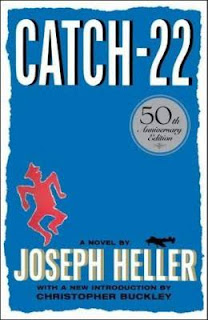
4. Catch-22 and for a brief moment believe that your dead friend's prostitute girlfriend wants to have sex with you before realizing that, no, she is still trying to kill you


5. Much Ado About Nothing and publicly shame and humiliate your fiancee at your wedding because you have been tricked into believing she is cheating on you by a man referred to as "the bastard prince"

"You whore!" Awkward.

6. The Great Gatsby and idolize the man in love with your married cousin who throws extravagant parties and always calls you "Old Sport"


7. 'Tis Pity She's a Whore and skewer your sister/lover's heart with a dagger before parading it around at her husband's birthday feast

Best-worst last line in the history of English literature

8. The Scarlet Letter and secretly father an illegitimate child, leaving your partner to take the fall


9. Jane Eyre and torture the man you love, who is also your boss, by consenting to marry him then leaving him after you discover he has stowed his mentally insane wife in the attic—that's right, he's already married!

Actually, Penguin Classics, Jane describes herself as plain and unattractive. Get it together.

10. The Odyssey and lynch the 12 unfaithful maids who fraternized with your wife's 108 suitors while you were away on business

A romance.

Saturday, January 23, 2016

Evil, And What to Do With It

Little known fact: When I started blogging here, it was mostly extremely brief reflections on books I'd listen to during my day job.

Well, it's back! Not the day job, but the brief reflections on books—I plan to call them "Book Bites," because alliteration is my jam.

First up. Michael Finkel's True Story: Murder, Memoir, Mea Culpa (apparently alliteration is his jam as well).
via amazon.com

I found Finkel's book by searching for "memoir" (subject keyword) and "e-audiobook" (media type) in the LA public library database, so I had little background information to go on when I started listening.

Background

In short, just as the author is fired from The New York Times for falsifying a character in an investigative news article, he finds himself in an odd friendship with Christian Longo, a man accused of murdering his wife and three children.

Their lives intersect after Finkel learns that Longo impersonated him while on the lam in Mexico—telling everyone who asked that he was a New York Times journalist. The two become avid pen pals and even friends.

Finkel weaves his downfall as a reporter with Longo's account of how he came to murder his wife and children. Although Longo's crimes are exceptional, Finkel comes to identify with Longo, seeing them as in some ways very much alike.

Reflection (spoilers!)

What would it be like to come face to face with evil? And what if you kind of liked the guy anyway? Finkel leaves no doubt in the reader's mind that Christian Longo is an evil person, even as he describes him as charming, witty, and likable.

At the end of his trial, Longo takes the stand to give his account of the murders. It's chilling—not because he's telling the truth (he seems incapable of this), but because of the nature of his lies (as Finkel points out).

I feel like this gets to the heart of a certain something about evil: it gets the details wrong—although internally consistent, Longo's account rings a false ethical note. Longo cannot paint himself in anything less than a favorable light, even as he describes killing his own two year old daughter. He is always the real victim. When he sheds tears over the death of his family (which he caused for no discernible reason), you get the sense that he is actually crying for himself—his loss, his nightmares, his pain. When he remembers hearing his daughter's screams, he feels sorry for himself for having to relive such a painful memory.

I felt conflicted about the character of Michael Finkel, the author. I have a difficult time sympathizing with writers who commit the kind of journalistic crimes that cost him his job. He admits to being an egoist—He was infatuated with "Michel Finkel, New York Times journalist." He admits that he's always had a problem with lying. And when he first brings up his crimes, he gives several superficial rationalizations (deadline pressure, not wanting to let his editor down) which smacks of denying full responsibility.

Ultimately, he comes clean, to his editors and to us. It's harrowing.

But I couldn't shake the sense that Finkel somewhat gleefully capitalized on his special connection with a murderer to revive his own career—I don't know whether this blind spot in the narration is deliberate or not. I don't think we needed a good deal of handwringing over how horrible the death of a women and three young children is—the despicable nature of the crime speaks for itself.

But Finkel seems far more interested in drawing connections between himself and Longo and their mutual manipulation than forthrightly examining the ethics of giving a murderer such free grace to tell his own story. Finkel's self-examination feels surface level at best.

After Longo is convicted on all counts and sentenced to death, he begins dangling the carrot of "What Really Happened" for Finkel—telling, retelling, and revising the story he told in court.

If you've ever dealt with a manipulative person who is trying to maintain a connection with you at all costs, you know exactly what is going on, although Finkel surprisingly seems unaware and initially falls for the gambit (tell me more...)

And there's another connection between Finkel and Longo: neither of them really consider the harm that they've done to other people. Finkel is sorry that he lied, yes, but he never examines (or even mentions) the consequences of his lies for anyone but himself—for example, by considering what it means for a white American male to impersonate a west African child laborer, or how he may have harmed the very humanitarian cause he was trying to support, or, to parallel Longo, how he inadvertently abbreviated or circumvented someone else's story.

In the end, I can't help but feel that as Longo tells and retells "his" story to his devoted audience (Finkel, in this case), he is killing his wife and children over and over and over and over again.

It makes me want to scream at the injustice of it—Longo can revise his life, distorting the truth, changing this or that detail at will, painting himself as the victim, deciding that the murders don't matter anymore and that he's moving on—meanwhile, he put a period on the lives of his family and forever wrested away their ability to write or revise or retell.

After reading this book, I have no interest in reading another word about or by Christian Longo. I don't want to hear his side of the story. Again. I don't care what happens to him. The best I can do is indifference.

Finkel describes having this same experience—wanting nothing to do with Longo—before being sucked back into his web of manipulation and deception. It never ends.

Crossover Recommendations

I was reminded of M. Scott Peck's People of the Lie: The Hope for Healing Human Evil. There are definite echoes of Christian Longo in Peck's account of evil. I highly recommend this book.

via amazon.com
For more on writers who play fast and loose with the truth, Jon Ronson's book So You've Been Publicly Shamed spends a lot of time on famed fibber Jonah Lehrer. Interestingly enough, Lehrer is also an opaque character—there's never a plausible explanation for why he did what he did, perhaps because the only explanation is that he thought he could get away with it.

Netflix's show Making a Murderer is an obvious companion piece to "True Story"—whether or not you think Steven Avery might still be guilty could be a litmus test of whether you believe in evil or not.

The Wizard of Oz and Other Narcissists by Eleanor Payson is one of the best books about narcissism that I've read. Longo was diagnosed with narcissistic personality disorder, and although most narcissists are not killers, a book about dealing with them might still be helpful.


Friday, June 13, 2014

A Story Worth Fighting For

I never imagined it would be this much of a struggle to be the hero of my own story, the lead in my high school play, the center of my own narrative.

No one and nothing prepared me for this. Not college. Not courses in feminist, post-modern, post-colonial, or Marxist theory. Not reading Doestoyevsky, the Bronte sisters, Donne, Shakespeare, or George Eliot. Not all the papers I wrote about hybridity, syntax or laughter. Not being good at school or good at my job. Not praise from teachers, employers or peers. 

Nothing. 

Part of being the hero means you get to have layers. So, for example, one of the most jarring things about inhabiting my identity is the baffling (to me) denial that I have a past. That things have happened to me. Not only that things have happened to me, but that I've been affected by these things that have happened to me.

At every fresh encounter with a new person, I'm assumed to be (supposed to be) a blank slate. 

As if you were the first stranger to tell me to, "Smile." 

The first white guy to call me "exotic." 

The first person to ask, "So, where are you from?"

The first man to speak to me in a condescending tone of voice about something technical. 

I'm told that I'm "cynical." That I have a bad attitude. That I "hate white people."

I feel like part of being human is learning from the past, taking in experiences that repeat themselves over and over again, making sense of these experiences and even molding them into a narrative. 

Like any three-dimensional character, don't I deserve a back story too? 

Like Marx said, history repeats itself, first as tragedy, second as farce. But sometimes it seems like even laughter is not allowed to me. Because to laugh is to have a distinct point of view that sees the cracks, the contradictions, the absurdities of the status quo. 

I think I can say that I've paid a price for not aquiecsing to the dominant narrative. And as I fight for my story, I can't help but feel like I'm fighting for my life. That if I don't have this, I have nothing. That if I don't fight for my story, no one else will. 

Sunday, January 13, 2013

Resolutions: A 2012 Retrospective

So, last year I made a few New Year's resolutions. This is a recap of what I actually did. Warning: Yes, it is depressing.

1. Read more.

Er, well, maybe I read more. You see, in 2011 I spent most of the year working at a bookstore warehouse surrounded by books, many of which I wanted to read, but couldn't (you know, what with working getting in the way and all).

I was textually frustrated.*

In 2012, I got another job, and then ANOTHER job, neither of which involved books. I did read a few books. I did not read as many as I would have liked.

New goal: get paid to read books.

Truthfully, I still read all the time. Probably for hours a day. I just read online material: blogs, Slate, articles, more blogs.

2. Write more.

I did write more (mostly for this blog). I did not, however, get published all that much. I kind of stopped trying after submitting to two places and not getting published.

One blog post that I wrote, Are You Experienced?  I originally submitted to Relevant. They didn't take it.

However, I don't regret the effort that I put into that essay. I worked a little harder than I normally do on the craft of it, and I took the time to be really honest with myself about not only what I felt but why I felt that way.

I think it paid off.

It's gotten more of a response than any other thing I've written.

Although my top post of all time is still How to hit on a girl on facebook. Thanks, Google.

3. Think less.

There's no real way to measure this. Did I go with my gut more? Worry less? Overanalyze less? Now I'm thinking about thinking!

4. Participate.

I'd like to think I participated, at least a little bit. I also blew off social commitments and plans for no other reason than that I was tired. I was that lame person who fell asleep by 11pm on New Year's Eve. I was the person who RSVP'ed on facebook and then never showed up. Sorry everyone.

5. Shoot more.
This one was actually kind of a success--I shot a lot, especially toward the beginning of the year.

I shot a short film with my sister. I shot footage for a music festival near San Diego, I shot a friend's feature-length Shakespeare adaptation. I had fun.

There are studies that say sharing goals actually makes you less likely to achieve them because just by getting positive social feedback, you already FEEL like you've achieved your goals, when actually you've only stated them out loud (or online).

I think this year will be more about discerning the difference between what I think I should want to do and what I ACTUALLY want to do.

I'm pretty sure I want to do more of the above.


*My theory about working in/at/for a bookstore or owning a bookstore is this: You should love books, but not too much. If you love books too much, you will want to keep them all for yourself, so you can read them or decoratively display them in your tastefully furnished hipster apartment. You won't want to let them go. Working around books without being able to read them is hard. Luckily, I have the willpower of small, scrappy mule with an eyepatch.

Thursday, November 8, 2012

How To Be Friends With a Girl, Part 2

If I was barely qualified to write the last installment, How To Be Friends With a Girl, I am even less qualified to write this sequel, How to be Friends with a Girl, Part 2 or "How To Be Friends With a Girl If You Are a Girl."

All of my best friends are girls. However, this is by no means through my own efforts and/or merit. There are people who are good at making friends and there are people who are not so good at making friends. I would fall into the latter category. Blame it on my rugged individualism or general lack of social skills. Or the fact that I don't usually like talking to people I don't know.

Let's just say that I love my friends and I don't know how they put up with me.

But how do you do it? Make friends with other women, I mean. It can't be that hard...right?

Again, I am the wrong person to be giving advice here. But let me introduce you to my buddy Aristotle. Aristotle believed that there are three types of friends:

Friend A is the life of the party. She knows all the best clubs, wears all the best clothes, and drives a Mini. You call her when you want to go out and have a good time.

Friend B always has the hookup--she knows everybody. If you are looking for an industry job or selling your script, she knows exactly who you need to talk to.

Friend C is someone you both like and admire. You two share common interests, work cooperatively toward common goals, and generally enjoy each other's company.

In sum, there are three types of friendship: friendships based on pleasure, friendships based on utility, and friendships based on character. Or, in other words, we are friends with someone because she is either pleasant, useful, or good [in the Aristotelian sense].

Aristotle advocates for the third type of friendship, in which you value your friend for herself, and not because she is fun to be around or because she can do something for you.

If we're honest, we've probably all been someone's friend because it was either pleasant or convenient--she had a car and we didn't, or she liked playing Super Mario Brothers, and so did we.

But ideally, we want Friend C.

Problems arise when these motivations are in conflict: Friend X chooses Friend Y out of utility, while Friend Y chooses Friend X for herself. There's a lack of reciprocity.

Of course, if we value a friend for herself, she is by default both pleasant and useful to us, not because we automatically "use" our friends, but because being friends with someone of good character is always beneficial: "With friends men are more able both to think and act" [from Nicomachean Ethics].

Friends are necessary for a virtuous (good) life. I quote:

"Between friends there is no need for justice, but people who are just still need the quality of friendship; and indeed friendship is considered to be justice in the fullest sense."

When both friends are good (equal in virtue), reciprocity (justice) is not an issue. It exists by definition between two people of good character. When you want the best for your friend and she wants the best for you--it's not a question of justice. Rather, friendship is a context for the exercise of virtue.

The good things you do for a friend, you in a sense do for yourself, without expecting anything in return. I certainly feel this way with my close friends. I feel almost selfish wanting to spend time with them because I enjoy their company so much.

If I have any advice on making friends with a girl (or anyone really), it would be: 

1. Look for similar interests.
2. Look for someone whose values you admire.
3. Compliment her taste.
4. Work on a common goal together.

Oh, and read Aristotle's Nicomachean Ethics. Brilliant stuff.

Sunday, November 4, 2012

How to Survive a Day Job Without Losing Your Mind

Photo by Rob
Last time I wrote about Working for Free Without Losing Your Self-respect. In this post, you are working for money, not Kit Kats. Congratulations!

However, chances are, you are not yet getting paid to do what you really want to do. You are working a day job--slightly pleasant, less than stimulating, occasionally tedious. Welcome to the next 40 years of your life.

Just kidding.

I believe that you are meant for bigger and better things. But in the meantime, here are some tips to get you through. First--a little contextualizing background: After working for free for a couple months and a month or so of funemployment (I was actually pretty bored), I got a real job working in data entry. So, here goes:

1. Feed your mind.

I may or may not have "watched" an entire four seasons of Grey's Anatomy at my previous day/survival job. Hey. Don't judge. Those were desperate times.

Ok, so don't do what I did and watch trashy TV. If you work at a job that doesn't engage your mind, find something that does. I recommend:

This American Life
Audiobooks. They could save you. Many libraries offer audiobooks for download (no late fees!).
Itunes U

2. Pay your rent.

This may seem obvious, but if you are not making enough money in your day gig to afford rent, you might want to consider getting another job. Or two. Don't go into debt if you can help it. It's not worth it, and chances are you're not going to sell your brilliant screenplay for $$$ just yet.

3. Pursue your passions [on the side].

It can be easy to lose sight of why you moved to Los Angeles in the first place. Just because you're working a day job, doesn't mean you can't pursue your passions. Make time for writing, or acting, or shooting. It may seem counter-intuitive, but sometimes the tedium of 9-5 can be a shot in the arm, creatively speaking.

4. Flexibility FTW

If you get to choose your day job, I would choose something that gives you the flexibility to pursue your passions. Sometimes, it can be a trade off between pay and flexibility, but if you can get both--my job was more of a survival job [as in, barely making enough to survive], but it did give me the flexibility to work other, filmmaking type jobs. I lucked out. Ideally, your work will support you and your goals.

5. Respect your work.

At the same time, it's important to respect the work that you do, that people are counting on you to do your job and do it well, whether that's pulling pints or packing boxes. Respect your boss, respect your co-workers, respect the work.

6. Write it down.

If you are working a particularly boring job, you will have a TON of ideas. A ton. Make sure to write them down (if it doesn't interrupt your work). Scribble stuff in a notebook on your lunch break. Brainstorm during your commute. Take advantage of the ideas that come to you when you're not even trying.

7. Surrender your expectations.

This is a tough one. But if you can, work on letting go of your expectations for success--of what you "should" have achieved by now. Yes, some of your peers will be more successful than you at this stage. So what? You are not your job. And besides, the job that's going to fulfill you completely doesn't even exist. If you're currently working a survival job, I highly recommend reading this post (part of a great series) about underemployment: I Work, Therefore I Am.

8. This is only a phase.

I repeat: this is only a phase. Yeah, I guess you could end up working at Chipotle for the rest of your life, but I highly doubt it. I bet you 12 Kit Kats you'll end up doing something else. I used to stalk about mentally wringing my hands over how I was "wasting my life" working a job that didn't challenge me. Take heart. There is more.

Tune in next time for "Your First Real Industry Job: Don't Screw It Up."

Sunday, May 20, 2012

Life. And stuff.

I want to write about how much I like my new job, but I'm not sure if I can. So instead, a story:

When I was 16, I went to visit my dad in Beijing. A visit meant to last one month somehow stretched into six. For reasons I don't fully remember, comprehend, or wish to think about, I didn't want to go back to North Carolina.

I applied for an internship with a humanitarian organization in Beijing. As part of my application, I sent in an essay I had written for school entitled "Sexism in Paradise Lost" (It started early, folks). Somehow, I got the internship and started translating articles from English to Chinese.

This humanitarian organization also happened to have a media department. Cue life-changing event: I learned how to edit video using Final Cut Pro.

I started editing a camp video. I had dreams about cuts. I couldn't stop thinking about it. I was hooked. For the first time in my life, I was truly passionate about something.

I remember editing late, late at night in the empty office. I remember how I felt going in after a weekend away, the mixture of trepidation and elation as I pushed in the door--would they be happy to see me? Would I still feel at home? Did they think I was a nuisance? I remember the huge crush I had on a guy who worked there. He was at least 14 years older than me, and I tried really hard not to have a crush on him, so of course I did anyway. But most especially, I remember Ivy, the director of the media department, and how her enthusiasm, kindness, and dedication to teaching made me feel.

Interning there changed my life. And ever since then, I've wanted to be that same kind of person for someone else.

Because I know that if it weren't for the people who have mentored me and encouraged me, I wouldn't be pursuing filmmaking. I would have given up before even starting.

Maybe this helps explain how strongly I feel about church, production, and mentorship.

I feel very, very grateful, because I know the real world so very rarely bears any resemblance to the experience I had when I was 16.

I've mentioned this to some of my friends, but there have been times and places and people that have made me feel like some of my strongest character traits are a liability. I'm independent to a fault. I'm passionate and a bit obsessive when I really care about something. I'm extremely focused and driven. And sometimes that hasn't gone over well, and I've paid the price for falling outside of the gender norm or otherwise stepping on people's toes (egos).

None of this is true in my current job. I can be independent, driven, and a little bit obsessive, and it's not only okay, it's encouraged (not that I have nothing to learn about being more interdependent and sensitive to other people).

I can breathe. And for that, I am extremely grateful.

Monday, February 20, 2012

Beautiful Ghosts

"I can feel the skin on my forehead tingling, my blood rushing through a new course, my bones aching with a familiar pain. And I think, My mother was right. I am becoming Chinese."
-Amy Tan

I have never read The Joy Luck Club. For that matter, I have never read Maxine Kingston's The Warrior Woman. I am a traitor to my race. 


I went to a literary conference last weekend, and a high school student gave a presentation on the latter. In the discussion that followed, I realized the duality of my name.

My name in Chinese (first name), is composed of two characters:

The first is the character for "beautiful." The second is the character for "ghost" or "spirit."

Together, they might be translated "beautiful ghost" or "beautiful spirit."

So I realized something--America, in Chinese, is called "beautiful country" (same character for beautiful).

So, if you wanted to, you could say that my name contains both identities--my American identity, represented in "mei" (for America), and my Chinese identity (alter-ego), represented in "ling," which means "ghost" (ghost of the past?).

Of course, I'm grasping here. But I was struck by something someone (quoting Derrida about Marxism, apparently) said.

He said, "If you excise the ghost, you erase your identity."

And I thought, huh. Maybe there's more to being Chinese (half-Chinese) than looking like Mulan.

Maybe, in other words, I shouldn't excise the ghost or ignore its haunting. Sometimes I feel like its stalking me. And no matter how much I try to ignore it--it's still there--in a tightness in my throat, a tingling of the skin, an ache I can't place--a pain I can barely name, let alone feel.

When I cry, my eyes swell up and become smaller.

I am becoming Chinese. 


[Written April 10, 2008]

Sunday, January 22, 2012

Who I Am v. Who I Wish To Be

“Before I can tell my life what I want to do with it, I must listen to my life telling me who I am.” 
-Parker J. Palmer, Let Your Life Speak

I read (most of) an intriguing little book by Parker J. Palmer called Let Your Life Speak. It's a book about calling, vocation and listening as a means to discovering calling and vocation. 

Part of letting your life speak is separating who you are from who wish you were.

To give an example: I wish I were more of a technical/visual filmmaker than I am. I wish I could get excited and nerd out about new technology. I wish I cared about the visual style of David Fincher or John Ford. I wish I intuitively understood the difference between different video codecs.

Zadie Smith wrote a great essay about ideal readers and the authors they do not choose (rather, the writing of that author chooses you). She writes of E.M. Forster:
It happens that I am E.M. Forster's ideal reader, but I would much prefer to be Gustave Flaubert's or William Gaddis's or Franz Kafka's or Borges's. [...] Rightly or wrongly, I feel I get all his jokes and appreciate his nuances, that I am as hurt by his flaws as I am by my own, and as pleased when he is great as I would be if I did something great. I know Morgan. I know what he is going to say before he says it, as if we had been married thirty years. But at the same time, I am never bored by him. You might know three or four writers like this in your life, and likely as not, you will meet them when you are very young. Understand: They are not the writers you most respect, most envy, or even most enjoy. They are the ones you know. (from The Best American Nonrequired Reading 2003
I love this idea of writers and readers meant for each other like soul mates. Again, it's not about who you wish you were drawn to but about who you actually get, I mean really get. I can remember having feelings like this whilst reading Jane Eyre, though I'm not sure who I am the ideal reader for. I suppose I wish I were the ideal reader for Henry James.

I admire writers who can write for miles, days, pages and pages, but I am not that kind of writer. I struggle to reach page and word counts. When I write, I often skip over a bunch of explication and get straight to the point (or at least that's what one professor said). Am I leaving things out because I assume they are obvious? Am I just too lazy to properly set things up? Is this just the way that I write?

In a similar vein, to go back to filmmaking, I wish I had the compassion of a director like Cameron Crowe or Brad Silberling. I wish I cared about my characters the way that they do. I wish I had that kind of empathy, which is to imply that I don't.

All of this is to say a lot about who I am not--not technical, not obsessed with visuals, not given to torrents of words, not empathetic. I know less about what I am. I think that's where the listening comes in. Or the just doing. Relaxing into vocation.

If I'm hearing correctly, I think my life might be saying that I don't write/create within a social vacuum. Filmmaking is always collaborative and I enjoy that aspect of it. I create with my friends and the quality of the work reflects the quality of my relationships. I used to see that as a liability, because if the relationship fell apart, so would the project. But maybe it's more of a gift than a liability.

What about you? Is there a gap between who you are and who you wish you could be? 

Sunday, January 1, 2012

New Year's Resolutions

1. Read more.

In 2011, I rediscovered the audiobook, which is all well and good. However, I'd like to actually read a few books this year, eye to page, balls to leaf, etc.

2. Write more.


Maybe I should specify: write more for public consumption. I write a fair bit--I can't imagine NOT writing. It's part of who I am. A delightful cocktail of perfectionism and procrastination keeps me from writing for persons other than myself--I'm always looking for the perfect title, idea, opportunity.

So yeah. I'd like to write a feature length screenplay, and you can hold me to that. And more blogs.

3. Think less.

In the same category as thinking: talking about it, reading about it, writing about it. Write more, think less--sounds paradoxical, but there is certainly an element of writing that does not come from thinking but from putting pen to page. In other words, just do it. Less theory, more praxis.

4. Participate.

Sometimes, this means playing beer pong.

5. Shoot more.

Ideally, at least one project per month. Starting tomorrow.

Friday, November 25, 2011

Lose Yourself: Submission, Emotional Abuse and the Dorothea Effect

[I'm having a hard time writing this. I'm not sure if it's because my ideas haven't coalesced or because I keep seeing connections everywhere--in a way, I think in writing I figure out what I want to say--I start in in one place with one end in mind and then end up somewhere completely different.]

Holy Not Happy - An Unnecessary and Misleading Dichotomy

"What if God designed marriage to make us holy more than to make us happy?" asks the subtitle of Gary Thomas's book Sacred Marriage

It's a sobering thought. I suspect it's written as an anecdote to those Christians who divorce because "God wants me to be happy." 

However, both these conceptions of happiness seem suspiciously shallow. Surely there is more to happiness than the mere absence of physical, emotional or psychological pain. 

If God doesn't just want me to be happy, does that mean he wants me to suffer? So I can be more holy? If that's the case, the more marriage makes you suffer, the better. 

I'm taking it a little far, but I think the subtitle in question sets up an unnecessary opposition of holy versus happy, or being a person of character versus being happy (in a deeper sense) with your life.  

I also think that this opposition can be twisted into a justification for either perpetrating or enduring emotional abuse.  


The Problem with "Twilight" or  The Lure of False Submission

I was in an emotionally abusive relationship once, in a professional, not a romantic, context. And there's one thing that the other person would say to me that sticks out in memory: "I believe in you."

He meant to imply that as much as I failed to live up to my potential, if only I would give in to him and do what he said, I could be better. I could be more holy: "Let me control you and everything will work out."

As much as it stings my pride to admit it, there was something undeniably attractive about this offer. I knew I was flawed. That I screwed up. And here was someone honest enough to call me on my crap.

If only I could be better. If only I could stop failing. Maybe if I submitted my will to his, I would stop hurting people and actually become a better person.

It's the "this is for your own good" line of abuse--and there is something subtly alluring about letting go of responsibility for and control of your own life, your own dreams, your own being. I don't know how else to explain the success of "Twilight," which trumpets the kind of all-consuming love that demands the loss of self in the Other. I know only that self-immolation and self-abnegation are a temptation--particularly to those who feel less than whole to begin with.

The Dorothea Effect - It's About to Get Literary Y'all

Dorothea Brooke is a character in the novel "Middlemarch" by George Eliot. At base, she is a crusader without a crusade, a missionary without a mission field, a saint deprived of martyrdom. Being so, she makes her own martyrdom, choosing to marry a dourly pedantic and humorless man (Edward Casaubon) over twice her age, so that she might help him in his great, world-changing work, "The Key to All Mythologies" (as bad as it sounds--worse, actually).

Of course, if she were a man in nineteenth century England, her ambitions and ideals would find an easier outlet. As it is, she makes a disastrous marriage to the wrong man--dare I say because she desires holiness (to serve God by serving Casaubon) over happiness (in the sun is shining, birds are singing, isn't it a lovely day to be married to a hot young artist sense. *Spoiler alert* this happens later in the book).

Jane Eyre faces a similar temptation in the form of the handsome and deeply religious St. John Rivers. He asks Jane to marry him and follow him to the mission field as his help-meet. He does not love her, nor does he find her attractive. He simply sees that she is constitutionally and temperamentally suited for the rigors and challenges of missionary life. How romantic.

Adrienne Rich calls this the temptation of self-immolation--literally burning oneself alive.

Jane is tempted to a living death--sacrificing her life to St. John's missionary calling; denying her need to love and be loved by marrying a man for holiness and not happiness.

Dorothea falls into this temptation. Jane does not.

I would define "the Dorothea effect" as denying your own dreams/art/work/calling to serve the dreams/art/work/calling of another person.

In other words, find your own damn "Key to All Mythologies."

More to come on this later.


Inspirations:

1. This article about the end of a Christian marriage.
2. A talk at church (for women) about submitting to God's will.
3. Sacred Marriage by Gary Thomas (which I haven't read in full). 
4. Middlemarch by George Eliot
5. "The Temptations of a Motherless Woman" by Adrienne Rich.

Thursday, July 21, 2011

How Not to Waste Time

"Query: How contrive not to waste one's time? Answer: By being fully aware of it all the while. Ways in which this can be done: By spending one's days on an uneasy chair in a dentist's waiting room; by remaining on one's balcony all of a Sunday afternoon; by listening to lectures in a language one doesn't know; by traveling by the longest and least-convenient train routes, and of course standing all the way; by lining up at the box-office of theaters and then not buying a seat; and so forth."

-from The Plague by Albert Camus

This passage made me laugh.

Thursday, June 30, 2011

Nostalgia and the Unreflective, Active Present

"Live all you can; it's a mistake not to. It doesn't so much matter what you do in particular so long as you have your life. If you haven't had that what have you had?" 

This is perhaps the most famous quote from Henry James' The Ambassadors. And that's certainly understandable.

I recently listened to Juliet Naked, another book by Nick Hornby, and I groped my way back to this quote.

The heroine of the book, Annie (age 39), has lived very little. Stuck in a dead-end relationship with Duncan (40ish, a drip), Annie feels she has wasted the last 15 years of her life. This is a shock.

She wants to live. She very much wants to have a baby. By random chance, she begins an email correspondence with a cult rock musician. Then she actually gets to meet him in person and he comes to stay with her in her small, depressing seaside town in England.

You may see where this is going. When confronted with the choice of whether to sleep with him or not, a minor character delivers a speech similar to the one in James' novel.

But sex aside, what does it mean to live? Unless it means wearing really short shorts and sitting in a book warehouse, I'm not sure that I'm truly living at this moment. And what about the moment after that? What about now?

I'm afraid it's quote time again, straight from Annie's brain, courtesy of Hornby's narrator:

"The cliche had it that kids were the future, but that wasn't it. They were the unreflective, active present. They were not themselves nostalgic because they couldn't be. And they retarded nostalgia in their parents. Even as they were getting sick and being bullied and becoming addicted to heroin and getting pregnant, they were in the moment. And she wanted to be in the moment with them. She wanted to worry herself sick about school and bullying and drugs."

That phrase, "the unreflective, active present" is striking. I feel most alive in my unreflective, active moments. Anything that takes me out of myself--like writing or filmmaking.

I leave you with another part of that famous quote in The Ambassadors:

"The right time is any time that one is still so lucky as to have [...] Live!"

Monday, June 27, 2011

Light of My Life

I almost just finished listening to Lolita (performed by Jeremy Irons) and I'm not sure quite what to say about it.

The novel is brilliant, obviously. But having listened to it via audio book, what I really want is to read it via book book (visual book?). In other words Lolita makes me miss the textual, word-on-the-page experience of reading. 

Nabokov crams in gads of verbal puns and other delights, many of which I'm sure I didn't get. I suppose any reading of Lolita must also take into account the mean spirited nature of much of the humor:

"I had glanced at her as she smiled in her sleep and had kissed her on her moist brow, and had left her forever, with a note of tender adieu which I taped to her navel--otherwise she might not have found it."

Still hilarious.

And then there's the subject matter. I'm struck by the ease with which Lolita is transformed from a 12 year-old child to a 15 or 16 year-old adolescent, both in the film versions of Lolita (1962, 1997) and the imagination of the average person--a "Lolita" is usually well past puberty. The ease is striking because of the lengths that Nabokov goes to elucidate Humbert Humbert's interest in the physical immaturity of prepubescent girls.

This is all very unsettling--as it should be and as Nabokov intended it to be. Why then have we taken the book and turned it into the prototype for one of the conventional sex interests of men? Because it's more titillating and less horrifying?

If I could assign a few companion pieces to Lolita, I would assign a short story by Milan Kundera called, I think,  "Let the Old Dead Make Room for the Young Dead" and a short story by Doris Lessing called "The Habit of Loving."

Sunday, June 19, 2011

"How can any deny themselves the pleasure of my company?"

This audiobook version of "Their Eyes Were Watching God"  is superlatively good. Just amazing.

I had wanted to read "Their Eyes" after listening to an essay by Zadie Smith in her collection "Changing My Mind." In this essay, Smith writes about the universal literary tradition vs. the particularity of blackness--of female blackness. In sum, "It is not the Black Female Literary Tradition that makes Hurston great. It is Hurston herself."

I'm reminded of several things:

One, in my American literature class at community college we read "The Bluest Eye" by Toni Morrison. A classmate (white, sheltered) began wondering out loud whether or not black people were too invested in feeling sorry for themselves. The professor got upset.*

Two, a columnist in my college paper wrote in response to a lecture on God and black suffering, "We're talking about black suffering again?" or something to that effect.*

My American literature professor used to make a point about subjectivity--that saying, "You can't understand this book because you're not ____ (black, white, female, etc.)" is a fallacy.

It's like saying you have to be white, male, middle class and born in the 1930's to get "Rabbit, Run" or have lived with seven men of dubious appellation to properly decode "Snow White."

Hurston writes in her essay "How it Feels to be Colored Me":

"Sometimes, I feel discriminated against, but it does not make me angry. It merely astonishes me. How can any deny themselves the pleasure of my company? It's beyond me."

And so, maybe its not just black suffering we talk about, but human suffering.

Speaking of pleasure, this is one of my favorite scenes from the book:

"The sounds lulled Janie to soft slumber and she woke up with Tea Cake combing her hair and scratching the dandruff from her scalp. It made her more comfortable and drowsy.

'Tea Cake, where you git uh comb from tuh be combin' mah hair wid?'

'Ah brought it wid me. Come prepared tuh lay mah hands on it tonight.'"


*I mean, slavery was SO two centuries ago.

Friday, June 17, 2011

The Best Contraception

I can't get over the way posh English speakers pronounce the word "condom." They pronounce the "dom" as in "dominate" or "domicile" whereas American speakers pronounce it as in "wisdom" or "freedom." In the British pronunciation, both syllables end up having equal weight.

Try saying it out loud: "con-dom."

Now say it ten times fast.

I've been listening to the audiobook version of Nick Hornby's "Slam," a British YA novel about teenage pregnancy. The word condom comes up a lot.

I had just finished another book about teen pregnancy, "After"--as in after the 15 year-old protagonist dumps her unplanned baby in the trash. Yeah, hard-hitting stuff.

And so "Slam" launched me on the second half of my unintended teen pregnancy double feature, one told from the girl's perspective and one told from the boy's.

I can tell you this: listening to "After" made me never want to get pregnant. Even as a non-teenager. No way.

I liked "Slam" better. Nick Hornby ("High Fidelity", "About a Boy") has a way of making immature and clueless male beings sympathetic and even likable. Fundamentally, Hornby is a funny writer. His female characters are less fleshed-out, but this might be the by-product of first-person narration.

Hornby also wrote the screenplay for "An Education," which is told from a teenage girl's point of view. I don't remember "An Education" being particularly funny. Maybe I need to watch it again.

In conclusion, perhaps the best contraception of all is a book about getting pregnant at 15. That or a conDOM.

Thursday, May 26, 2011

On listening to "A Scanner Darkly" by Philip K. Dick

The book is a few funny/poignant anecdotes floating in a morass of paranoiac, hallucinatory ramblings.

Also, I'm glad that "balling" is no longer used as a synonym for, um, you know.

Addendum 11/7/11:

It would be remiss of me not to mention one hilarious episode in this morass: After ingesting a number of pills in order to die, one of Arctor's buddies finds himself trapped in an endless hallucination in which God takes him over each and every one of his sins, from the beginning. "Know your dealer," he intuits.

Also, there is Donna's rationale for rejecting Arctor's sexual advances, which I won't repeat here, revolving as it does around smuggling drugs and a certain part of the female anatomy.